The Illusion of Compliance: How 「Briefcase Companies」 Weaponize Free Ports to Evade Global Sanctions
In the high-stakes arena of global commodities, transactions are rarely simple. Unlike retail markets, the buying and selling of energy involves multi-million-dollar letters of credit, complex shipping logistics, international insurance, and overlapping legal jurisdictions. In this intricate web, the intermediary is king. Success hinges not just on price, but on who possesses the operational capability to stitch together the supplier, the buyer, the financing bank, and the physical logistics chain. A company can own zero factories, zero shipping fleets, and zero warehouses, yet still operate as the official seller in a transaction worth tens of millions of dollars.
However, when a transaction involves a highly sensitive, sanctioned source, the intermediary’s role shifts from a mere commercial facilitator to a master of geopolitical camouflage. Following the outbreak of the war in Ukraine, Western nations aggressively tightened sanctions on Russian industries to choke off their economic lifelines. Yet, global demand did not vanish; it simply migrated underground. This enforcement chasm has birthed a sprawling shadow network of third-country traders, transshipment brokers, and offshore briefcase companies. These low-registered-capital shell entities act as the ultimate identity bleach and financial buffer for illicit trade, systematically cutting the visible links between a sanctioned entity and the ultimate foreign buyer to create absolute plausible deniability.
To understand how these networks bypass Western enforcement, one must look at the underlying mechanics of modern sanctions evasion, which relies on a sophisticated three-part blueprint. It begins with physical identity laundering through mid-stream processing and switch billing. Because raw illicit cargo cannot sail directly from a sanctioned port to a Western buyer without triggering instant alarms, evaders frequently route the raw material through a secondary, non-sanctioned nation for physical transformation. At this midpoint, a briefcase company steps in as the nominal buyer, issuing a fresh commercial invoice and a new certificate of origin that effectively alters the pedigree of the goods from a sanctioned nation to a neutral third-party country. To prevent regulators from catching on, evaders deploy a hydra-like shell network, utilizing layers of corporate camouflage and disposable burner companies that are abandoned after one or two massive transactions. These entities utilize nominee directors, such as local secretarial firms or legal proxies, keeping the ultimate beneficial owners permanently hidden. Finally, the financial side of the trade is settled entirely outside the traditional Western banking apparatus, relying on local currency clearing, informal ledger netting like hawala, or cryptocurrency stablecoins to bypass the US Dollar clearing system and Western messaging networks.
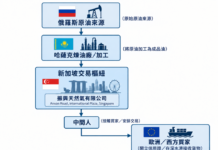
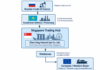
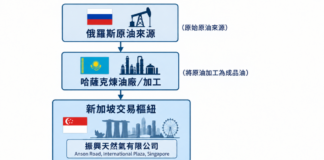
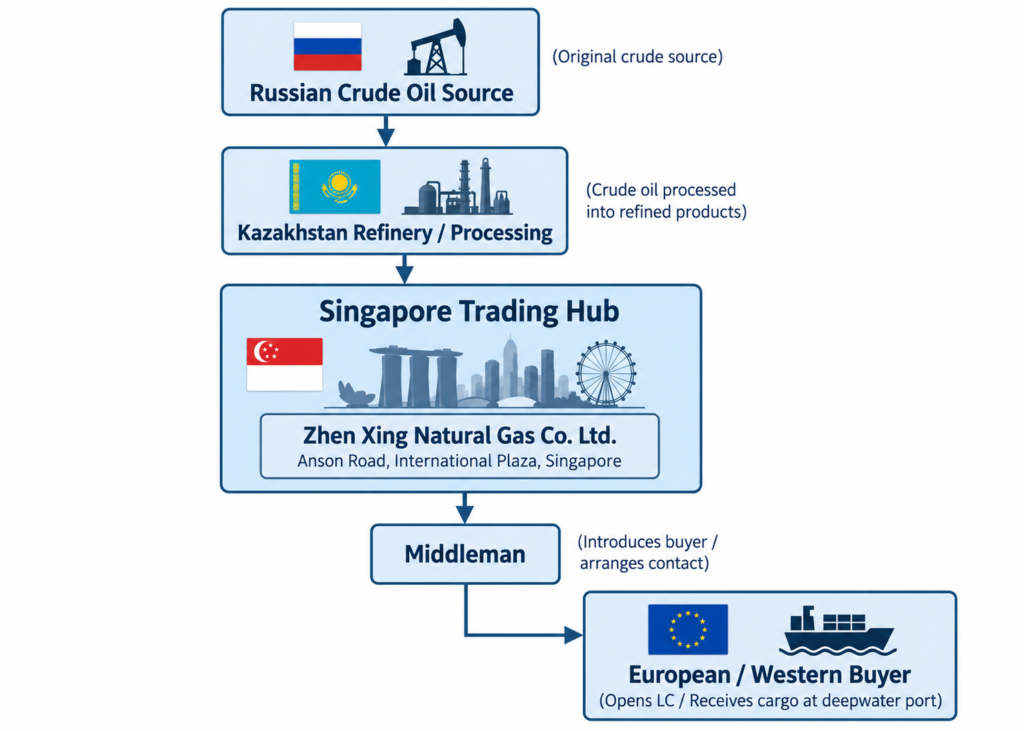
A recently uncovered cross-border commodity transaction provides a textbook, live illustration of these exact mechanisms in play. The transaction successfully bridged a restricted Russian source, a Western buyer, an opportunistic middleman, and a Singapore-registered trading firm named Zhen Xing Natural Gas Co., Ltd. (振興天然氣有限公司), located on Anson Road. The operational genesis of this specific deal exposes the profound complexity of modern supply-chain laundering. The trade did not begin with a simple paper transfer, but with the physical movement of Russian crude oil across the border into Kazakhstan. There, the sanctioned Russian crude was fed directly into a Kazakh refinery, undergoing a physical transformation that effectively bleached its geographical origin. Once processed into refined oil products, this newly neutralized energy asset was used to engage Zhen Xing. From there, a middleman stepped in to establish contact with the final European buyer, creating a multi-tiered supply chain that insulated the Western market from the raw Russian source.
On paper, Zhen Xing fit the archetype of a briefcase company perfectly, operating as a small-scale entity with limited physical staff and no internal production capacity. Within the commodities industry, corporate lean-ness is frequently defended as standard practice, as many legitimate trading firms do not own infrastructure, relying instead on trade finance and third-party logistics to move billions. However, in a sanctioned environment, this structural minimalism provides the perfect cover, raising a critical question: If Zhen Xing were removed from the equation, could the Kazakh refinery and the European buyer have completed the transaction directly? If the answer is no, then this Singaporean entity was not just a facilitator, but an indispensable cog in a sanctions-evasion machine designed to rebuild the legal relationship between processed illicit products and the ultimate buyer.
To determine Zhen Xing’s true economic function, an investigation must look past the Anson Road address and scrutinize the core documents of title, such as bills of lading, processing agreements, delivery records, and payment terms. If the upstream suppliers retained ultimate control over where the cargo sailed, who bore the costs of transit delays, and who settled quality disputes, then Zhen Xing was never a genuine commodity trader. Instead, it functioned purely as a transactional vehicle used to route contracts and mask the flow of funds. Furthermore, if Zhen Xing engaged in this multi-million-dollar energy trade with full knowledge that the raw material originated in Russia, its operations would directly violate Singapore’s strict regulatory compliance laws aimed at preventing the circumvention of international sanctions.
The Zhen Xing case highlights why global sanctions are so incredibly difficult to enforce. When a briefcase company operates out of a premium global financial hub like Singapore, it inherits a veneer of institutional legitimacy that satisfies standard Western compliance officers. Yet, while this specific transaction slipped through the cracks, the global enforcement net is rapidly tightening around these exact maneuvers, exploiting several core vulnerabilities that inevitably collapse these shadow networks.
First, these networks rely heavily on human secrecy, making them highly vulnerable to data leaks and insider bounties. Western regulatory agencies now offer multi-million-dollar rewards for information, prompting disgruntled logistics staff or compromised compliance officers to hand over unredacted documents that expose the true Russian origin behind the Singaporean facade. Furthermore, while a firm can hide behind standard triangular trade arguments, its banking behavior often betrays it. When a newly minted or structurally small firm suddenly moves tens of millions of dollars through its accounts, automated anti-money laundering algorithms trigger immediate alarms, forcing banks to implement stricter customer due diligence, examine actual headcount, and peer through nominee structures to see if the firm possesses the actual operational capacity to manage a complex transnational supply chain. Finally, regulators are increasingly turning to physical science through commodity fingerprinting. While contracts and invoices can be faked, and even when oil is blended or refined in third countries like Kazakhstan, laboratory testing at destination ports can analyze the specific isotopic or chemical signatures of a cargo, instantly proving whether the base crude originated from a restricted Russian field regardless of what the paper trail claims.
Ultimately, the case of Zhen Xing demonstrates that the global demand for restricted commodities will always find a path of least resistance by inserting a physical laundering hub and a low-overhead, third-country intermediary into the legal chain. On the surface, each tier features independent companies, separate contracts, and seemingly valid commercial justifications. To the independent observer, however, it is a highly sophisticated exercise in identity laundering designed to slice a direct supply chain into fragmented legal layers. While these firms may celebrate individual completed deliveries, the transparency of the modern digital financial system means that the shelf life of such operations is shorter than ever. A briefcase company only needs to be caught once for its entire multi-layered network to completely unravel.